FAQs
What kinds of decisions do we work on?
Refer to these examples for the types of choices we can navigate together in a Decision Lab. This list is not meant to be complete. If you feel stuck between options or unsure how to move forward, this process is likely a good fit. (Decision Labs focus on clarity and decision-making, not clinical recommendations.)
_______
If Decision Labs don't provide clinical recommendations, how can they help with health-related concerns?
Decision Labs focus on clarifying decisions rather than providing clinical recommendations. For health-related concerns, this often means helping clients define the real decision they are facing, understand viable options, and identify a direction that fits their priorities and capacity. This clarity frequently makes next steps, including discussions with clinicians or care teams, more focused and productive.
_______
Why "The Ideal" Fails in Real Life
Clinical guidance is built for populations. Lives are lived individually.
Local Realities
Local Realities shape food systems, access, and norms.
Example: A farm family shouldn't be forced into supermarket nutrition logic that ignores their own land.
Personal Bandwidth
Personal Bandwidth shapes capacity, energy, and resilience.
Example: A burned-out professional cannot be measured against fitness benchmarks designed for someone with zero stress.
Environmental Constraints
Environmental Constraints shape what is logistically possible long before choice exists.
Example: A night-shift schedule shouldn't be judged by a "9-to-5" whole-foods system.
_______
I've already used AI to research my condition. How is CHI different?
AI is good at gathering information. It is not good at applying it to a human life. It cannot assess your actual capacity, real-world constraints, or personal risk and it can be confidently wrong.
CHI acts as a professional second set of eyes. We help you stress-test what you've found, identify what needs clinical validation, prepare the right questions for your providers, and translate information into a plan that actually fits your life, environment, and bandwidth.
These questions reflect the kinds of conversations we have most often with people considering a Decision Lab or Health Strategy session.
_______
What happens when I enroll in a Decision Lab?
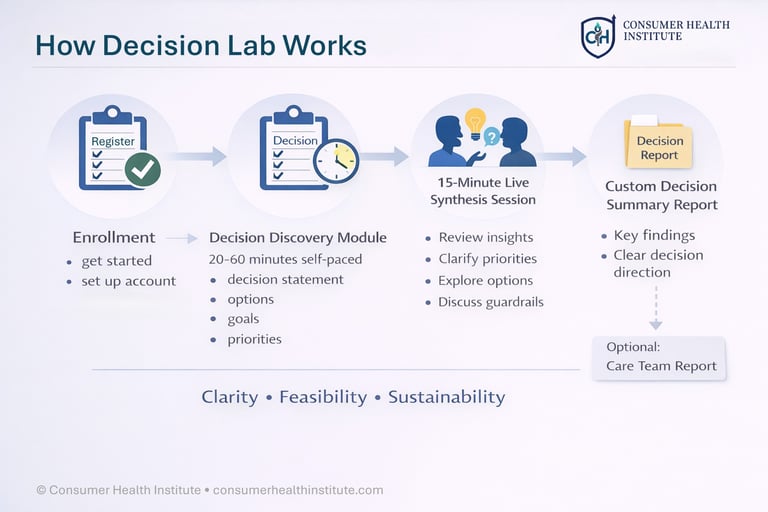
This diagram shows what happens after you decide to enroll. You don't need to understand every step in advance. It is simply a transparent view of the process once you say yes.
_______
What do people say about the experience?
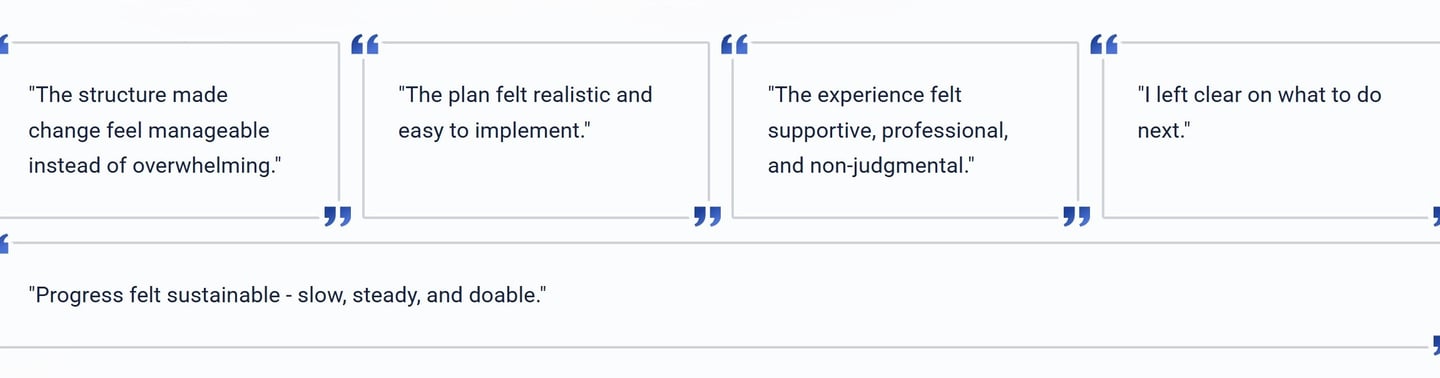
Real feedback from clients who have benifitted from our Health Implementation Strategy:
Medical & Treatment Direction
This may include situations such as deciding whether to begin a medication or continue with lifestyle strategies first, weighing hormonal versus non-hormonal approaches, or determining how to think through treatment options before discussing them with your clinician.
Eating, Weight, & Relationship with Food
Examples may involve realizing that a previously successful approach is no longer working, feeling unsure whether to focus on what you eat, how much, or how consistently, or wanting eating to feel more manageable and less mentally exhausting.
Products, Supplements, & Health Tools
Some people come in unsure whether a supplement, wearable, or health app will meaningfully help or simply add more noise, or how to decide what tools are actually worth their time and energy.
General Health Direction
This often includes feeling pulled in multiple directions, knowing something needs to change but not knowing where to start, or feeling overwhelmed by conflicting advice and wanting a clearer way forward.
CHI acts as a thinking partner — helping you organize priorities, values, and constraints so you can move forward with clarity and have more productive conversations with your care team. See a brief summary of examples of when a Decision Lab may be helpful.
_______
Do you accept insurance?
CHI is a self-pay practice and does not bill insurance. Payment is due at the time of booking.
For Health Strategy Sessions, a superbill can be provided if you have out-of-network benefits and would like to request possible reimbursement for nutrition services.
Decision Labs are not designed for insurance reimbursement.
Many people choose this approach because it allows for more flexibility and a more personalized level of support.
_______
Do I need a referral?
A referral is not required. Individuals may schedule directly.
Providers are welcome to submit a referral using our online form or downloadable PDF for fax submission. Visit our Referral Page.
_______
What is included in a Health Strategy Session?
Understanding Your Health Picture: We start by looking at the full picture including your health history, current habits, lifestyle, and any challenges you’re facing to understand what is really going on.
Making Sense of the Information: We translate medical, nutrition, and lifestyle information into clear, practical insights to identify what matters most for your health.
Setting Priorities & Direction: Together, we determine what to focus on first, helping reduce overwhelm and align your next steps with your goals and current capacity.
Clear Next Steps for You: You leave with specific, practical actions that fit your life, so you know where to begin and how to move forward.
Tools, Resources & Support: We provide helpful resources, strategies, or optional tools to support you as you put these changes into practice.
Ongoing Adaptation & Sustainability: We adjust your approach over time based on what is working and what needs to change to support long-term success.
See examples of when a health strategy session may be helpful
Explore how nutrition counseling and health strategy work together
FAQs
What kinds of decisions do we work on?
Refer to these examples for the types of choices we can navigate together in a Decision Lab. This list is not meant to be complete. If you feel stuck between options or unsure how to move forward, this process is likely a good fit. (Decision Labs focus on clarity and decision-making, not clinical recommendations.)
Medical & Treatment Direction: Deciding whether to start or delay medication, weighing different treatment approaches, or clarifying how to think through options before talking with your clinician.
Eating, Weight & Relationship with Food: Sorting through what’s no longer working, deciding where to focus (what, how much, or how consistently to eat), and making food choices feel more manageable and less exhausting.
Products, Supplements & Health Tools: Figuring out whether a supplement, wearable, or app is actually helpful — or just adding more noise.
General Health Direction: Feeling pulled in multiple directions, knowing something needs to change but not knowing where to start, or wanting a clearer way forward amid conflicting advice.
CHI acts as a thinking partner — helping you organize priorities, values, and constraints so you can move forward with clarity and have more productive conversations with your care team. See a brief summary of examples of when a Decision Lab may be helpful.
_______
If Decision Labs don't provide clinical recommendations, how can they help with health-related concerns?
Decision Labs focus on clarifying decisions rather than providing clinical recommendations. For health-related concerns, this often means helping clients define the real decision they are facing, understand viable options, and identify a direction that fits their priorities and capacity. This clarity frequently makes next steps, including discussions with clinicians or care teams, more focused and productive.
_______
Why "The Ideal" Fails in Real Life
Clinical guidance is built for populations. Lives are lived individually.
Local Realities
Local Realities shape food systems, access, and norms.
Example: A farm family shouldn't be forced into supermarket nutrition logic that ignores their own land.
Personal Bandwidth
Personal Bandwidth shapes capacity, energy, and resilience.
Example: A burned-out professional cannot be measured against fitness benchmarks designed for someone with zero stress.
Environmental Constraints
Environmental Constraints shape what is logistically possible long before choice exists.
Example: A night-shift schedule shouldn't be judged by a "9-to-5" whole-foods system.
_______
I've already used AI to research my condition. How is CHI different?
AI is good at gathering information. It is not good at applying it to a human life. It cannot assess your actual capacity, real-world constraints, or personal risk and it can be confidently wrong.
CHI acts as a professional second set of eyes. We help you stress-test what you've found, identify what needs clinical validation, prepare the right questions for your providers, and translate information into a plan that actually fits your life, environment, and bandwidth.
These questions reflect the kinds of conversations we have most often with people considering a Decision Lab or Health Strategy session.
_______
What happens when I enroll in a Decision Lab?
This diagram shows what happens after you decide to enroll. You don't need to understand every step in advance. It is simply a transparent view of the process once you say yes.
_______
What do people say about the experience?
Real feedback from clients who have benifitted from our Health Implementation Strategy:
“The structure made change feel manageable instead of overwhelming.”
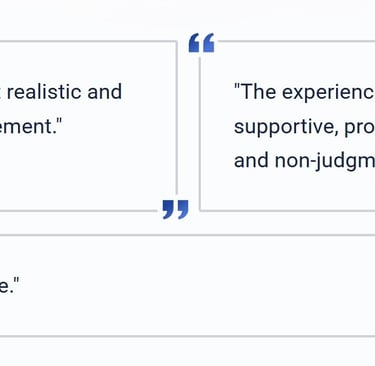
“The plan felt realistic and easy to implement.”
“The experience felt supportive, professional, and non-judgmental.”
“I left clear on what to do next."
“Progress felt sustainable — slow, steady, and doable."
_______
What is included in a Health Strategy Session?
Understanding Your Health Picture: We start by looking at the full picture including your health history, current habits, lifestyle, and any challenges you’re facing to understand what is really going on.
Making Sense of the Information: We translate medical, nutrition, and lifestyle information into clear, practical insights to identify what matters most for your health.
Setting Priorities & Direction: Together, we determine what to focus on first, helping reduce overwhelm and align your next steps with your goals and current capacity.
Clear Next Steps for You: You leave with specific, practical actions that fit your life, so you know where to begin and how to move forward.
Tools, Resources & Support: We provide helpful resources, strategies, or optional tools to support you as you put these changes into practice.
Ongoing Adaptation & Sustainability: We adjust your approach over time based on what is working and what needs to change to support long-term success.
See examples of when a health strategy session may be helpful
Explore how nutrition counseling and health strategy work together
_______
Do I need a referral?
A referral is not required. Individuals may schedule directly.
Providers are welcome to submit a referral using our online form or downloadable PDF for fax submission. Visit our Referral Page.
_______
Do you accept insurance?
CHI is a self-pay practice and does not bill insurance. Payment is due at the time of booking.
For Health Strategy Sessions, a superbill can be provided if you have out-of-network benefits and would like to request possible reimbursement for nutrition services.
Decision Labs are not designed for insurance reimbursement.
Many people choose this approach because it allows for more flexibility and a more personalized level of support.
© 2026 Consumer Health Institute LLC • Michigan, USA • Telehealth Services • Privacy • Terms • Disclaimers
Ready to move forward? Booking links are available on the Home and Services pages.
Referring a patient or client? Visit the referral page.